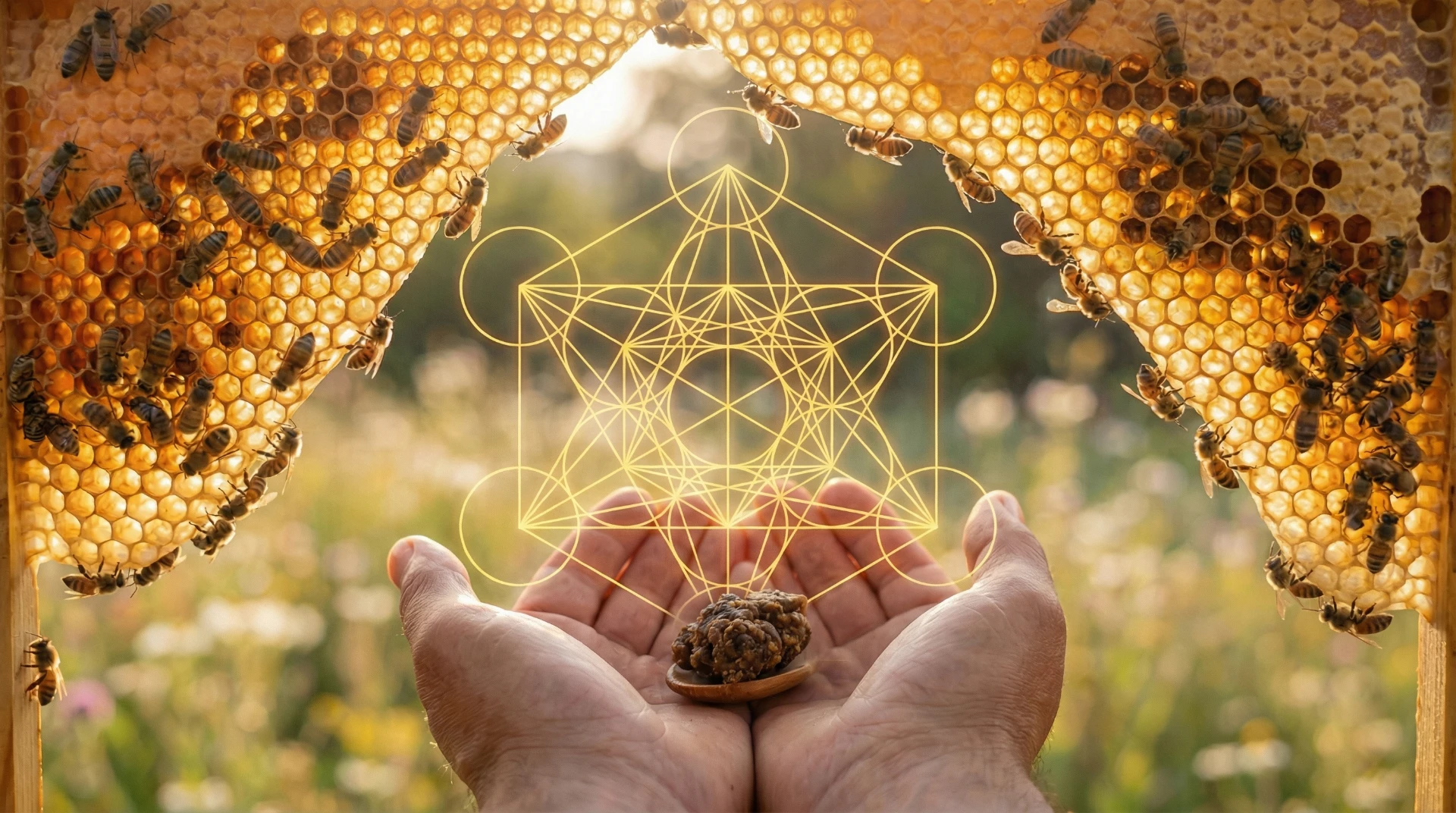
Sacred Use
Hive Ferment as Living Ritual, the Fifth Ferment as Ceremony
If the Fifth Ferment is nature's most complete food, then hive-fermented bee bread is not merely a product — it is a portal.
It is the altar and the offering.
The teacher and the lesson.
The nourishment and the taste.
To eat hive-fermented food is not to consume. It is to participate in a sacred loop of life, one that has been turning, uninterrupted, since before fire, before farming, before written language.
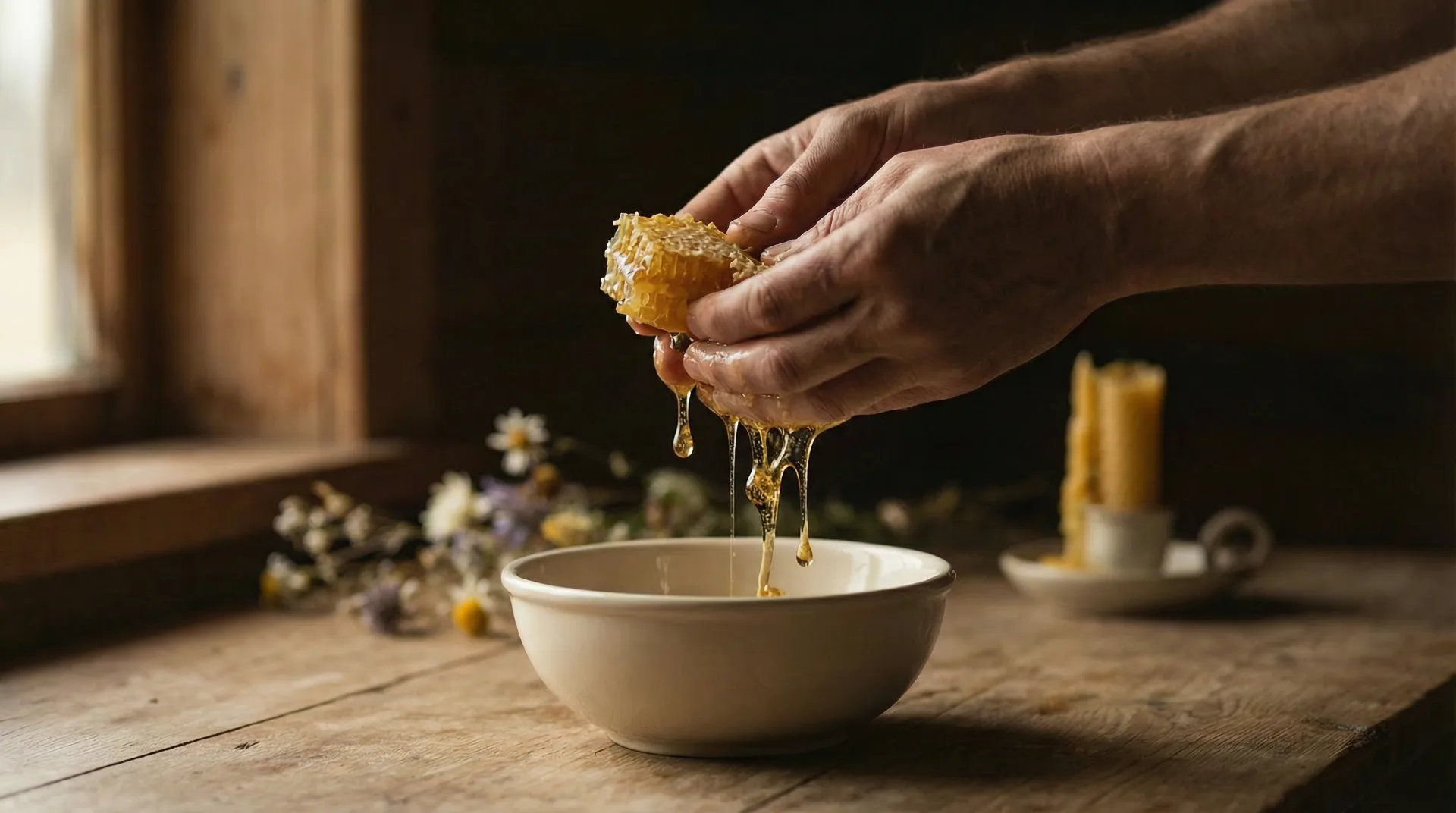
The Hive as Temple
A beehive is more than an insect colony. It is a living shrine to cooperation, order, rhythm, and offering.
The queen births the future.
The drones offer their life for one flight.
The workers forage, ferment, build, defend, die and return to earth.
The pollen becomes bee bread.
The bee bread becomes the next generation.
There is no waste. No ego. No dominance. Only role, rhythm, and reciprocity.
When humans receive from the hive — especially fermented bee bread — we are receiving from a temple.
To treat it as anything less would be to dishonor not only the bees, but the entire web of flowering life that feeds them.
Food as Sacred Act
Across human cultures, food has served as more than sustenance — it is a medium for spiritual connection, social bonding, and communion with the divine.[1][2]
Anthropologist Marcel Mauss documented how gift-giving, particularly of food, creates reciprocal obligations and social bonds that transcend mere transaction.[3] Food offerings to deities, ancestors, and spirits appear in virtually every religious tradition — from Hindu prasad to Christian communion, from Shinto shrine offerings to Native American first-fruits ceremonies.
The ritualization of eating transforms the physical act into something transcendent:
- Gratitude practices (saying grace, blessings before meals) acknowledge food as gift, not entitlement
- Communal meals strengthen social cohesion and reinforce group identity
- Sacred foods carry symbolic meaning beyond nutrition — representing divine presence, ancestral connection, or spiritual transformation
What makes food sacred is not the food itself, but the intention and awareness we bring to it.
Hive fermentation invites this sacred attention — because it carries the intelligence of an entire ecosystem, refined over evolutionary time, and requires nothing from us but reverence.
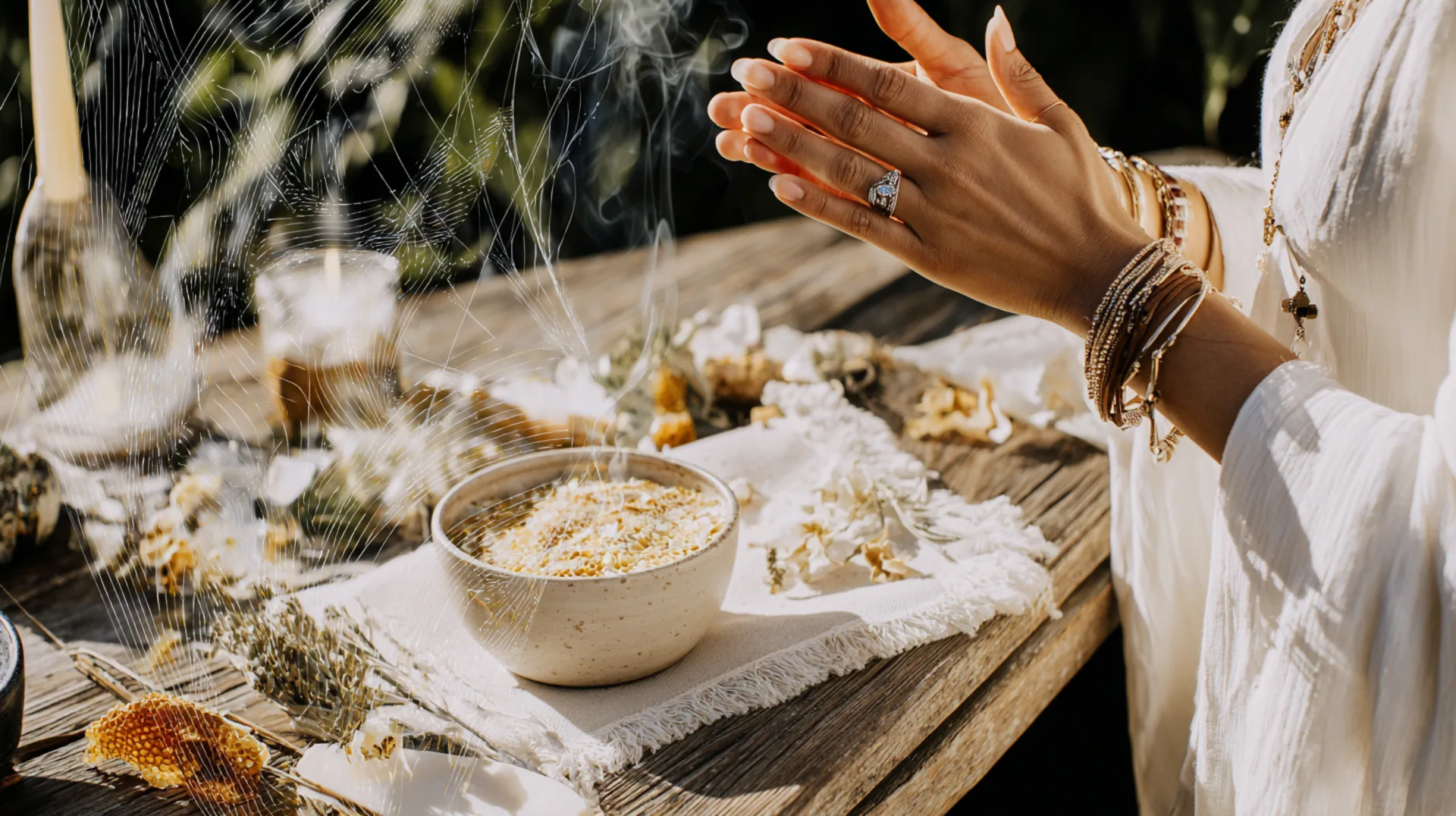
A Practice of Return
Hive-fermented foods like bee bread are meant to be received ceremonially — not mindlessly consumed, but honored as a gift from the hive and the earth.
Here is one practice for reconnecting body, mind, and memory to the Hive:
A Daily Ritual (Suggested)
- 1. Pause.
Hold the jar. Feel its weight. Remember what went into it — thousands of foraging flights, millions of flowers, a hive working in rhythm with time.
- 2. Smell.
Open the jar and breathe in. Let the acidic tang, smoky floral notes, and fermented brightness call you back to earth.
- 3. Taste.
Take a small spoonful. Let it melt on your tongue. Don't rush. Taste the complexity — sweet, sour, smooth, wild. Observe that what you're tasting is knowledge older than recipes.
- 4. Receive.
As it enters your body, thank the bees. Thank the flowers. Thank the microbial life that transformed chaos into nourishment. Thank your own body for being wise enough to want it.
- 5. Close.
Seal the jar. Whisper a word of gratitude. Plant a flower seed, if you have one. Or simply listen, for a moment, to the hum within the world.
This is not a prescription. It's a remembering.
Ceremony Beyond the Individual
While personal practice matters, the deepest power of sacred food lies in community.
Consider sharing hive-fermented food at:
- Morning gatherings, as a way to start the day in gratitude
- Seasonal celebrations, honoring the rhythms of bloom and harvest
- Healing circles, as an offering of nourishment and presence
- Rites of passage, marking transitions with the food of transformation
In each case, the Fifth Ferment becomes more than nutrition. It becomes a sacrament — a visible sign of an invisible grace.
The Return of the Sacred
We live in a time when the sacred has been exiled from daily life.
But it hasn't disappeared. It's been waiting — in the hive, in the flower, in the microbial intelligence that knows how to transform decay into life.
To receive the Fifth Ferment with intention is to begin the return.
Not back to a mythical past — but forward, into a future where the sacred and the everyday are one again.
References (3)
- [1]
Detienne, Marcel. The Gardens of Adonis: Spices in Greek Mythology. Princeton University Press, 1977.
- [2]
Bell, Catherine. Ritual: Perspectives and Dimensions. Oxford University Press, 1997.
- [3]
Mauss, Marcel. The Gift: The Form and Reason for Exchange in Archaic Societies. Translated by W.D. Halls, W.W. Norton, 1990.