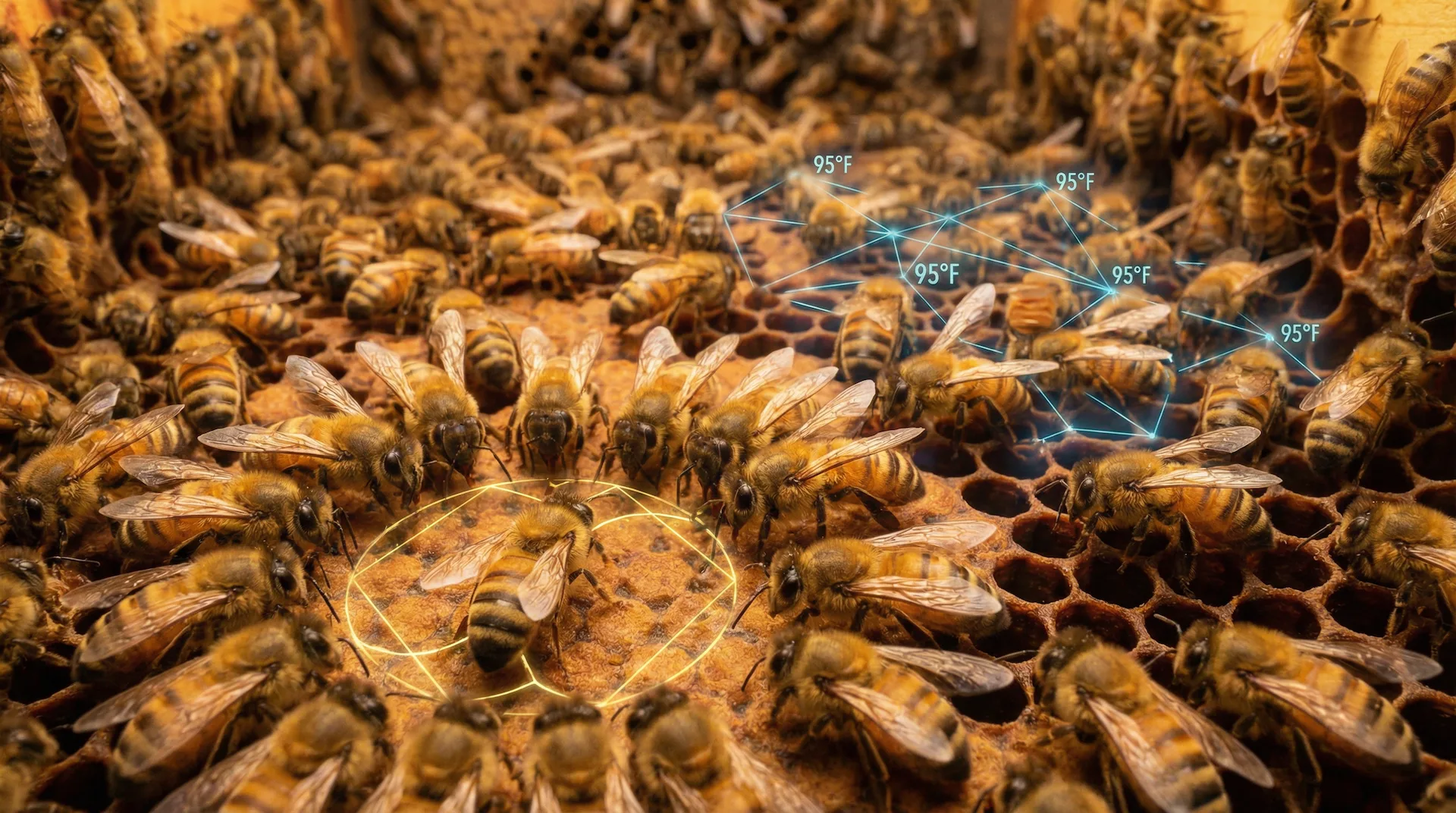
The Science of Hive Ferment
Enzymes, Ecosystems, and the Alchemy of the Hive
It would be tempting to call hive fermentation magical — and in many ways, it is. But like all true magic, it's rooted in science that modern humans are only beginning to understand.
Hive fermentation — the Fifth Ferment — is not mystical because it defies nature, but because it perfectly embodies it. It is a form of bioengineering that predates human civilization, refined over tens of millions of years by some of the most complex societies on Earth: the honeybees, and their older cousins, the stingless bees.
This is ecological engineering, and it is older than our species.
Bee Saliva: The Original Enzyme Complex
The first act of fermentation in the hive doesn't come from a microbe — it comes from the mouth of a bee.
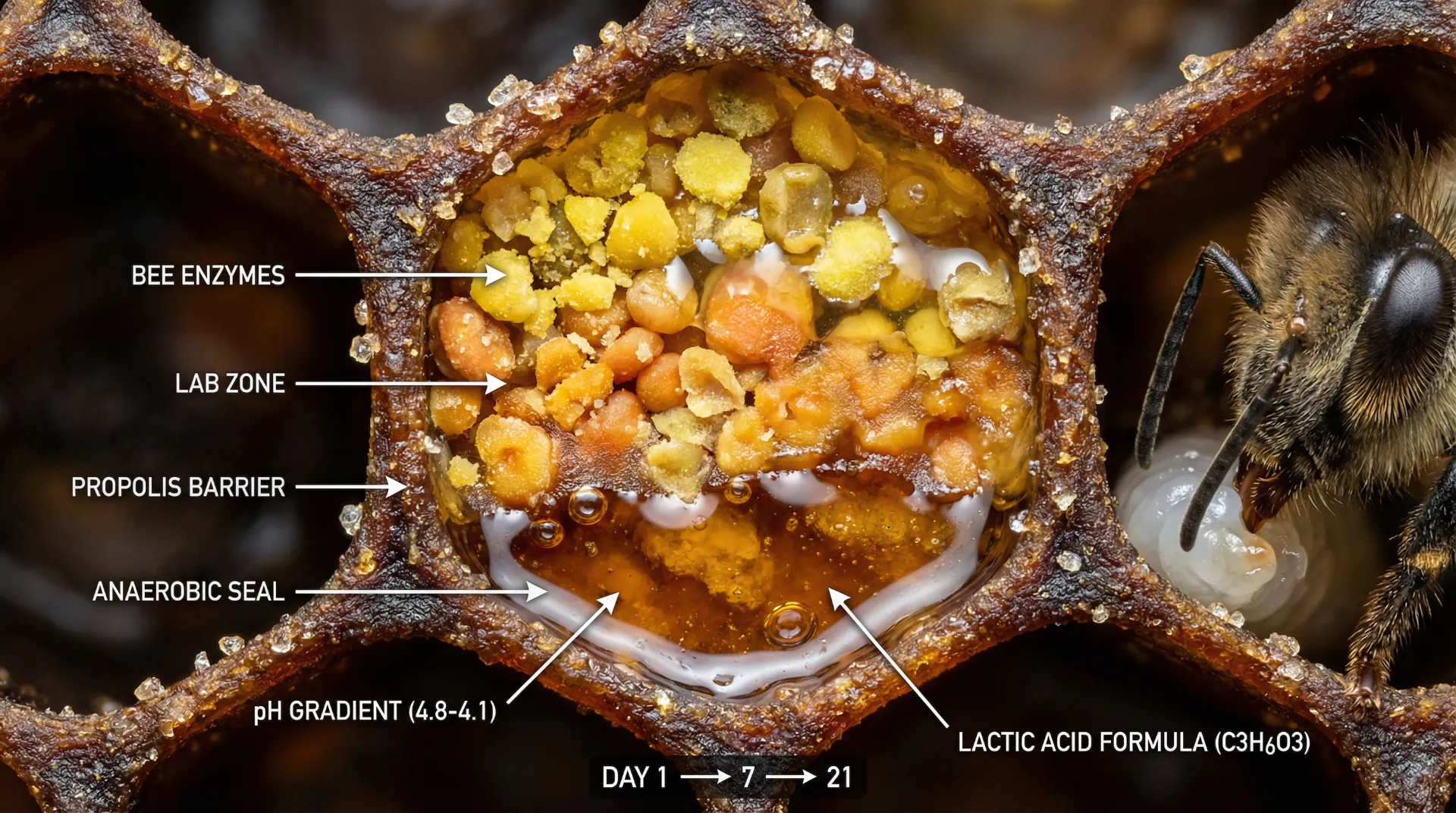
When a forager bee gathers pollen, she mixes it with tiny amounts of nectar and her own saliva, a clear fluid loaded with enzymes from glands in her head.[1] These glands produce a sophisticated enzyme cocktail that begins transforming pollen the moment it's collected:
- Invertase (α-glucosidase): Hydrolyzes sucrose into glucose and fructose, making sugars immediately accessible to microbes[1][2]
- Amylase (α- and β-amylase, also called diastase): Breaks down complex starches and polysaccharides into simpler sugars like maltose and glucose[3]
- Glucose oxidase: Converts glucose into gluconic acid and hydrogen peroxide, contributing to antimicrobial preservation[3][4]
These enzymes come from the hypopharyngeal glands, in the bee's head. In a young nurse bee, the same glands make the jelly that feeds the larvae. When she is old enough to forage, they switch to making enzymes for nectar and pollen.[1][3]
This enzymatic pre-digestion is crucial: pollen grains are encased in a nearly indestructible outer wall called exine, made of sporopollenin — one of the most chemically resistant biological polymers known.[5] Bee enzymes don't break this wall directly, but they soften the pollen structure and begin hydrolyzing the contents that leak through apertures in the grain, making nutrients accessible to both bees and the microbes that will complete the fermentation.
This mixture — pollen softened, unfolded, and enzymatically activated — is not yet food, but not just pollen anymore. It's the beginning of a living transformation.
The bee forms this into a pellet and deposits it deep in the hive, in a wax cell — where the next phase begins.
Anaerobic Alchemy: Lactic Fermentation Without Human Hands
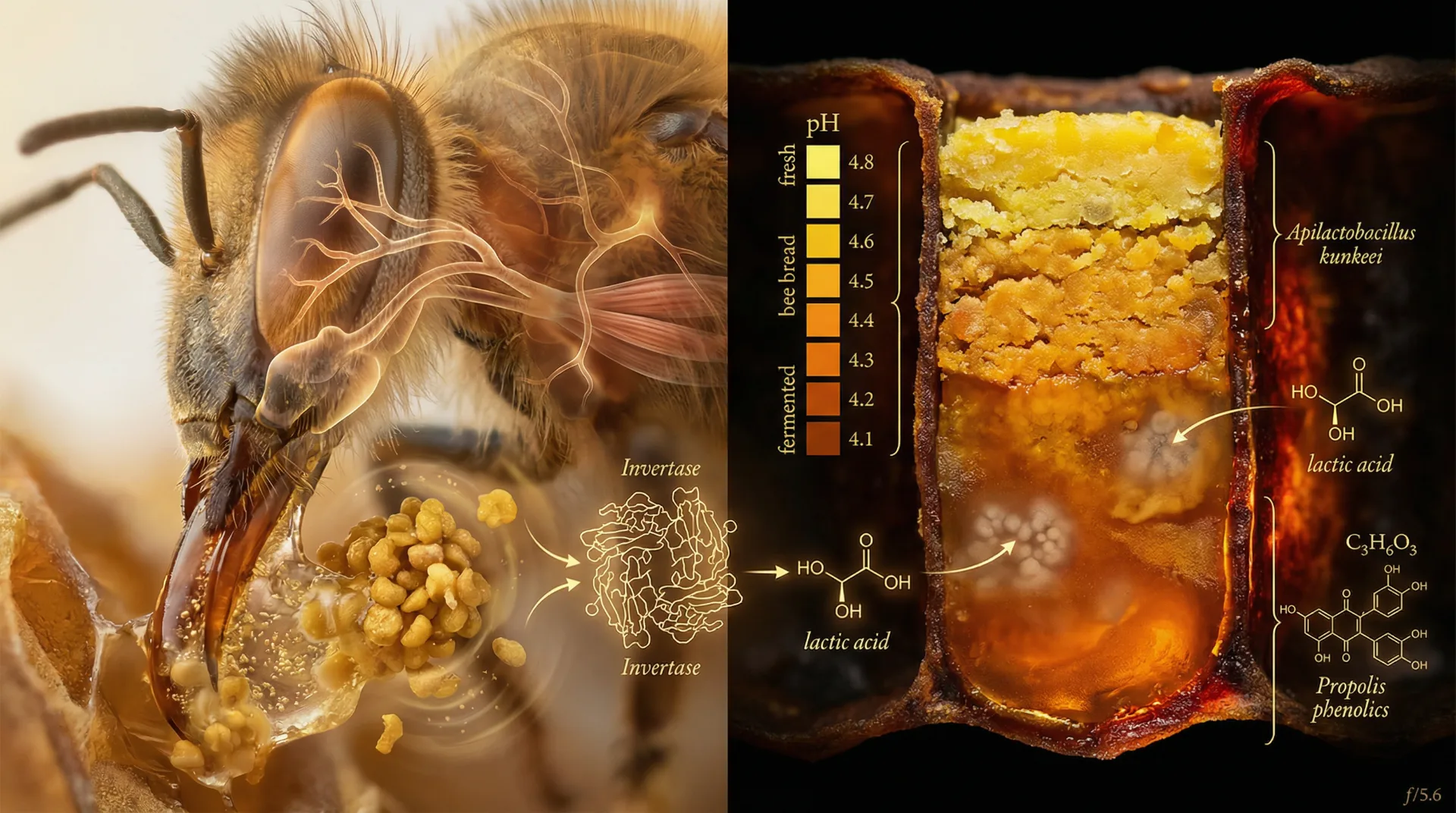
Inside the cell, young worker bees pack the pollen-saliva mixture down tightly. A thin layer of honey seals the top, creating a low-oxygen, anaerobic environment — the same conditions humans would discover, much later, in crocks of sauerkraut and kimchi: lactic acid fermentation.
Native lactic acid bacteria (LAB) colonize the bee bread and drive the fermentation. Unlike typical LAB that prefer glucose, honeybees host a unique group called fructophilic lactic acid bacteria (FLAB), specialized to metabolize the fructose-rich environment of flowers and nectar.[6]
Over the following days the cell sours. Its pH falls to around 4.3, acidic enough that spoilage microbes can't take hold.[7] The food is now protected by its own chemistry.
The Dominant Species
Research has identified the key players in bee bread fermentation:[8]
- Apilactobacillus kunkeei (formerly Lactobacillus kunkeei): The dominant species in mature bee bread, specially adapted to the acidic, fructose-rich hive environment
- Fructobacillus fructosus: Another fructophilic species that thrives in bee bread's unique niche
- Lactiplantibacillus plantarum: Found in fresh bee bread, produces lactic acid and antimicrobial compounds
- Lacticaseibacillus rhamnosus: Demonstrates high survival in acidic conditions and shows strong probiotic potential
- Pediococcus pentosaceus: A homofermentative LAB found in some bee bread samples with notable resilience
The Bioavailability Advantage
One of the most remarkable aspects of hive fermentation is how it transforms raw pollen — which is largely indigestible to most animals — into one of the most nourishing foods in the hive.
Raw bee pollen is hard to digest: its armored outer wall keeps part of the nourishment locked inside. Fermentation in the hive helps open it up. In a laboratory model of human digestion, about three-quarters of bee bread's protein was digested, more than from raw pollen.[9][10]
No accident. Tens of millions of years of practice.
What the Cell Becomes
What emerges from this process is not just preserved pollen. It's a transformed substance with:
- Protein that is easier to digest than raw pollen
- Increased antioxidant activity
- Live lactic acid bacteria
- Organic acids that preserve and protect
- Bioactive compounds unique to the floral sources
This is food as nature intended it: living, layered, and intelligent.